
Alienation and "Dark Logoi": The Eclipse of Scripture's Metaphysical Horizon, Part II
Reflections Hegelian and Origenist

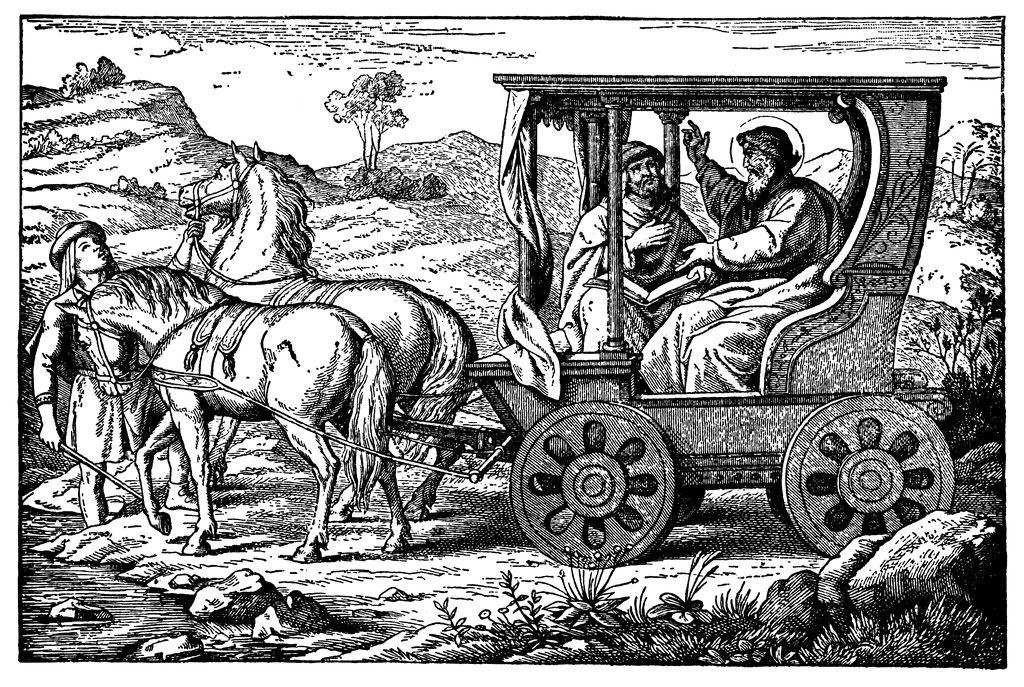
In my last post, I sketched a puzzling phenomenon: a sort of experiential “lag” common among former evangelicals who have found their way into more catholic expressions of the Christian faith.
The richness of a whole is potentially accessible through any one of its parts, and so liturgical beauty, historical inquiry, philosophical initiation, or personal encounter with a spiritual mentor are each capable of serving as conversion’s first catalyst. Why not the Biblical text?
Yet anecdotally, although its difficulties sometimes are the occasion for venturing beyond the horizons of evangelicalism, Scripture seldom serves as the positive initial mediation of the experience of deeper catholicity. (I note in passing that I have a half-baked suspicion that more Pentecostal or charismatic circles may be an exception to this generalization).
More puzzling still, even long after exposure to catholic Christianity and its traditional of metaphysical reflection, Scripture can feel less rich—at least for the intellectually inclined among us—than a treatise by Maximus the Confessor, Dionysius the Areopagite, or even great Neoplatonist texts by Proclus or Plotinus. Why?
In this post (and potentially subsequent ones), I don’t claim to have any comprehensive answers, but will merely a few overlapping suggestions. I especially want to connect the common (but by no means universal) post-evangelical experience of a temporary alienation from Scripture to an encounter with the banal, disturbing, or “dark logoi” Origen saw as embedded in the literal level of the biblical text.
Tarrying with the Negative: In Praise of Alienation
There are many reasons for this kind of burnout, but one of them is a long and painful experience of a mismatch between the total adequacy expected of Scripture (intellectually, spiritually, and emotionally) and what it actually yields when approached through an evangelical hermeneutic.
One feels, perhaps on an unconscious level, betrayed by the unfulfilled promises of inerrancy and sola scriptura, which were expected not only to yield ready answers but dispense an adequate spiritual/psychological cure for every ill. (If I were truly Gen Z, I would use the world trauma in this context).
Against this background, one is naturally only too happy to celebrate the role of tradition (liturgy, magisterium, spiritual direction), in rallying to Scripture’s aid and shouldering the burden no text can carry alone.
Why not, in one’s spiritual life, 1) lean on the Book of Common Prayer or the Divine Liturgy in the wake of such disappointment? And why not, on a more reflective level, 2) place catholicity’s distinctiveness precisely here: we are not, one is often told, “people of the book.” Unlike evangelicals/Protestants/pick your derogatory label.
If I am rather suspicious of the second, which can foreclose a (dialectical) catholic return to Scripture, I have tremendous sympathy for the first.
Indeed, far from criticizing, I wish to celebrate and radicalize this initial post-evangelical alienation from Scripture as a necessary (for some, if not all) moment in a broader spiritual itinerary and a proper apprehension of the banal, disturbing, or “dark logoi” placed in Scripture to arouse this very sort of response.
Scripture is written in such a way as to rebuff certain forms of approach, Origen tells us, so that those patient enough to push through this initial alienation will be opened to its deeper meanings. This is, he says, the reason why certain contradictions, absurdities, and even morally offensive elements have been sprinkled within it. As he writes: “dark logoi, riddles, and parables are included in every Psalm ‘of sagacity.’”
Against every romantic dream of organic immediacy, we are meant to be alienated by Scripture, and to endure negative moments of confusion, offense, and outrage. Only by tarrying with this negativity do we really encounter Scripture as a spiritual reality. The text incorporates our own critical responses into its own (Christ’s own) body, as Taylor Ross has persuasively argued. The experience of how the text can be boring, pointless, or worse is irreplaceable, and indeed is what makes Scripture Scripture.
The greatest danger is not that we will be too alienated from Scripture, but that we will not have the courage to follow our alienation all the way to its breaking point, on the other side of which lies a hard-won second naivete.
Indeed, perhaps the greatest problem with evangelical approaches to Scripture (so enamored with inerrancy etc.) is that they do not leave any room for us to be alienated by the Bible, and thus make no room for the spiritual opening which cannot be experienced otherwise.
If this is so, then I fear that many catholic approaches to Scripture are scarcely less guilty. “Tradition” and the magisterium swoop in all too quickly to direct our attention away from or attenuate the scandal of these texts.
And instead of grappling with these dark logoi, we are given positivistic dogmatic schemata which float free of Scripture or simplistic figural keys (Mary and the Eucharist mapped onto a barely disguised covenantal heilsgeschichte).
In short, one cause of our ongoing alienation from Scripture is our fear (whether evangelical or catholic in flavor) of trusting ourselves and God enough to embrace alienation to the hilt, to the point where it doubles back to become the way home. In a dialectical reversal or parallax shift, the obstacle becomes the path. “Where the danger is, also grows the saving power.”
If Scripture does not appear metaphysically rich at first glance, it is because it reserves its riches for the one who has first been scandalized by its apparent poverty. It only reveals itself as metaphysical (indeed, only constitutes itself Scripture) through an elliptical circuit which passes through our own subjectivity, negation included.
Alienation is essentially a modern secular word equivalent to sin..
Sin being the mind-based presumption of separation from the all-pervasive Living Divine Being.
There is no real existence until sin is transcended. All actions and states of presumed knowledge and experience are empty, painful, problematic until the mind-based presumption of separation from The Living Divine Reality Being is utterly transcended.
There is no truly human life without conscious Divine-Communion, or the submission/surrender of the entire conscious and functional being to the Absolute Living Divine Being/Person, on which it depends completely, even for the next breath. Without such Divine Communion, there is no true humanity, no real responsibility, and no freedom. Without such Divine Communion the individual is simply a bewildered functional entity living an unconscious adventure of functional relations. There is no Sacred or Divine plane to his of her awareness.
All beings, both human and non-human require Divine Compassion, Love, and Blessing, the unbreakable thread of Communion with the Living Divine Being made certain and true and directly experienced
Wow! Thank you.